ADAPT Sleep for Shift Workers and Irregular Schedules
Share
ADAPT Sleep for Shift Workers and Irregular Schedules
If you work nights, rotate shifts, or just don't have the luxury of a fixed bedtime, "get on a sleep schedule" is advice that doesn't apply to you. ADAPT Sleep for shift workers and irregular schedules isn't about forcing your body onto someone else's clock — it's about building a wind-down signal you can trigger whenever your day actually ends, whether that's 11pm or 11am. That's the real problem with most sleep advice: it assumes a 9-to-5 life. Yours isn't one, and your routine shouldn't pretend otherwise.
Why Shift Work Breaks the Usual Sleep Rules
Most sleep guidance is built around a single, repeating cue: it gets dark, your body winds down, you sleep for eight hours, the sun comes up. Shift work and rotating schedules break that cue constantly. Nurses on 12-hour rotations, warehouse and logistics workers on swing shifts, new parents, founders running a business across time zones — none of you get the same bedtime twice in a row.
The result isn't just "tired." It's a nervous system that never gets a consistent signal for when to downshift. Your body starts treating sleep as something that happens to you between obligations instead of something you actively prepare for. That's the gap worth closing — not by fighting your schedule, but by giving your body a cue that doesn't depend on the clock at all.
Why Timed Sleep Aids Don't Work for a Moving Schedule
Most mainstream sleep products — melatonin gummies especially — are built around timing. Take it 30 to 60 minutes before the bedtime you're trying to hit, and the clock does the rest. That works fine if your bedtime is the same every night. It falls apart the moment your "bedtime" is 7am after a night shift, or shifts by three hours week to week.
Melatonin dosed at the wrong point in your cycle can leave you groggy instead of rested, and for people already dealing with a disrupted circadian rhythm, stacking an artificial melatonin spike on top of that disruption isn't always the fix it's marketed as. It's one of the angles most shift-work sleep content skips entirely — they'll tell you to use blackout curtains and cut caffeine, but they rarely address what to do about the supplement aisle itself.
Fixed Nights vs. Rotating Shifts: Two Different Problems
It's worth separating two situations that get lumped together under "shift work." If you work a fixed night shift — same hours, every week — your body can eventually adapt to a consistent inverted schedule. It's not easy, but it's at least predictable, and your wind-down routine can live at roughly the same clock time every day.
Rotating shifts are the harder case. Days this week, nights next week, a swing shift the week after — your body never gets enough repetitions at any single clock time to build a habit around it. This is where most generic shift-work advice quietly stops being useful, because it's written for the fixed-night case. If your hours genuinely move, the fix has to be built around the routine itself, not the hour it happens to fall on.
Build the Routine, Not the Clock Time
The more reliable approach for an irregular schedule is to stop anchoring to a time and start anchoring to a sequence. Your body can learn "when this sequence happens, sleep is next" even if the sequence starts at a different hour every few days. A workable version looks like:
Dim the lights and put the phone down. Drink something that signals wind-down rather than wind-up — water, not a second coffee. Do the same two or three things every time, in the same order, regardless of whether it's 10pm or 8am. Consistency of sequence does the job that consistency of clock time can't, when your schedule won't allow it.
Where ADAPT Sleep Fits a Schedule That Doesn't Sit Still
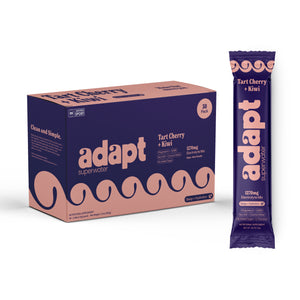
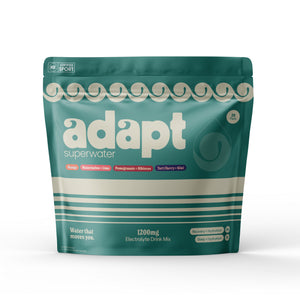
This is the piece we built ADAPT Sleep Tart Cherry & Kiwi around. It's melatonin-free, so there's no artificial hormone spike to time perfectly against a bedtime that keeps moving. Instead, it leans on magnesium, GABA, L-theanine, and tart cherry to support a natural wind-down — ingredients that work with your nervous system rather than trying to override your clock. You mix it, you drink it, and it becomes the cue in your sequence: whenever you drink ADAPT Sleep, your body starts learning that rest comes next, no matter what the actual time on the wall says.
It's also just a drink, which matters more than it sounds. A ritual built around pouring a packet into water and drinking it slowly is easier to repeat consistently than remembering to swallow a pill at a precise minute — especially when you're running on four hours of sleep from the night before.
Making the Ritual Travel With You
Shift workers who sleep well long-term tend to treat the wind-down ritual as portable. It goes with them whether they're sleeping at midnight on a day off or at 9am after a closing shift. Keep the sequence short — three steps, five minutes, nothing that depends on a specific room or a specific hour. Pack your ADAPT Sleep packets the same way you'd pack your badge or your work shoes: it's part of the kit, not an afterthought you remember only on the nights you can plan ahead for.
Over a few weeks, that repetition is what actually retrains the signal. It's not a single good night's sleep you're after — it's teaching your body that this sequence, at whatever hour it happens, means it's safe to power down.
Frequently Asked Questions
Can I drink ADAPT Sleep before a daytime nap after a night shift?
Yes. Because it's melatonin-free, it isn't tied to tricking your body into thinking it's nighttime — it's about triggering the same wind-down cue you'd use at any other hour. Plenty of our shift-working customers use it specifically for daytime sleep after an overnight shift.
Will ADAPT Sleep make me groggy before my next shift?
It's formulated to support a natural wind-down rather than sedate you, so it isn't designed to leave you groggy the way an overshot melatonin dose can. As with anything you put in your body, pay attention to how you personally respond, especially the first few times you try it before a shift.
How is ADAPT Sleep different from melatonin for rotating schedules?
Melatonin works best when timed precisely against the bedtime you're targeting, which is hard when that bedtime keeps changing. ADAPT Sleep skips the timed-hormone approach entirely and instead uses magnesium, GABA, L-theanine, and tart cherry to support relaxation whenever you drink it — so it doesn't lose effectiveness just because your schedule moved.
Can I drink it every day even if my schedule is inconsistent?
Yes — it's built for daily use as part of a routine, not as an occasional emergency dose. The consistency is in the ritual, not the clock time, which is exactly what an irregular schedule needs.
Does ADAPT Sleep help with shift work sleep disorder?
ADAPT Sleep is a clean, functional hydration and wind-down drink, not a treatment for any diagnosed sleep condition. If you're dealing with ongoing sleep disruption from shift work, that's worth bringing to a doctor — ADAPT Sleep is built to support a healthy nightly (or daily) wind-down routine alongside that, not replace medical care.
Build a Routine That Doesn't Need a Fixed Clock
Your schedule isn't going to stop moving, so the fix isn't forcing a 9-to-5 sleep routine onto a job that doesn't run on one. It's building a short, repeatable ritual your body can recognize no matter what hour it happens — and giving it a melatonin-free cue it can actually rely on. That's what ADAPT Sleep is for.
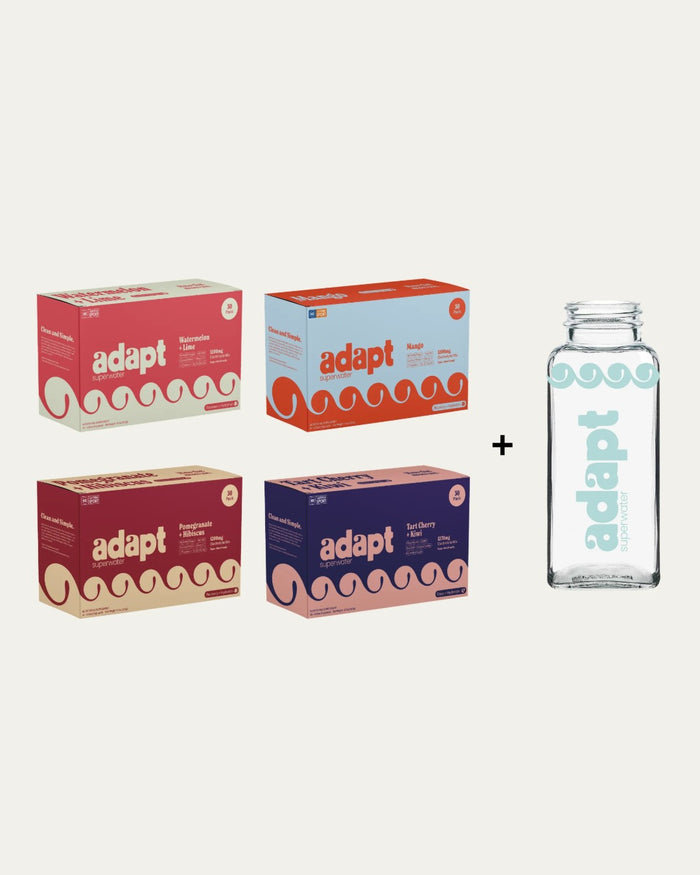
Ready to build your own wind-down ritual? Shop ADAPT Sleep and the rest of the ADAPT SuperWater lineup, or head to the Adaptations blog for more on hydration, recovery, and sleep.