The Five-Minute Wind-Down Habit That Actually Helps You Unwind
Share
The Five-Minute Wind-Down Habit That Actually Helps You Unwind
Most nights, "winding down" turns into another to-do list — dim the lights, put the phone in another room, stretch, journal, breathe, maybe light a candle. By the time you've done all of it, you're more awake than when you started. The five-minute wind-down habit that actually helps you unwind is built on a different idea: pick one thing, make it automatic, and do it the same way every night until your body stops waiting for permission to relax.
You don't need a routine. You need a cue. Here's how to build one that takes less time than scrolling through your group chat.
Why Most Wind-Down Advice Doesn't Work
Search "evening routine" and you'll find lists with eight, ten, sometimes fifteen steps. Tea, journaling, stretching, a bath, blue-light glasses, a sound machine, a gratitude list — all of it stacked into one twenty-minute production. It's not bad advice. It's just too much advice.
A routine with that many steps only works on the nights you have the energy to run through all of them — which, if you're training, traveling, working late, or parenting, is not most nights. The habit falls apart the first time you skip it, because there was never really a habit. There was a checklist.
A five-minute habit survives the bad nights. It's short enough to do when you're exhausted, simple enough to do on autopilot, and consistent enough that your brain starts recognizing it as the signal that the day is actually over.
The Five-Minute Habit, Step by Step
This isn't a new routine to memorize. It's five things, in order, that take about a minute each:
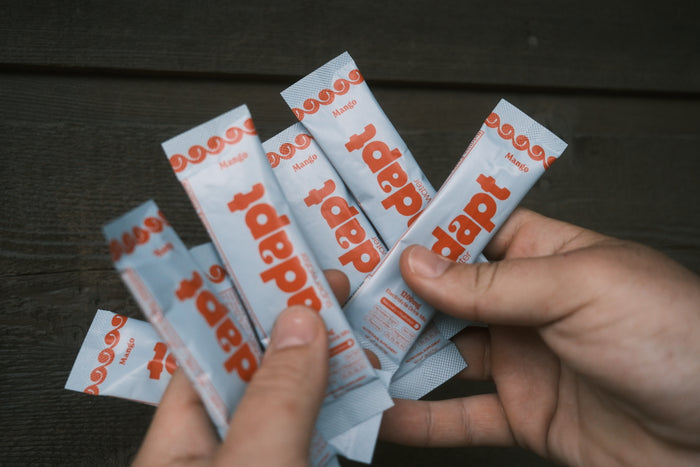
Minute one — pour. Mix your drink. We'll get into why this is the anchor in a minute, but the act of mixing something is the cue that tells your brain the day is closing out.
Minute two — phone down, somewhere else. Not face-down on the nightstand. Out of the room, or at least out of arm's reach. This is the step most people skip and the one that matters most.
Minute three — lights down. Overhead lights off, one lamp on. You're not redecorating. You're giving your eyes a reason to believe it's actually nighttime.
Minute four — three slow breaths. In for four counts, out for six. Not a meditation session. Just enough to drop your shoulders.
Minute five — drink it, sit still. No scrolling while you do this one. Just sit, or lie down, and let the last minute be boring on purpose.
That's it. No candles required. No app to open. The whole thing is designed to work exactly as well on a Tuesday after a bad day as it does on a Sunday when you have nothing else going on.
Why the "Pour" Step Is the One That Sticks
Habits need a trigger your brain can't talk you out of, and physical actions work better than mental ones. Telling yourself "I should relax now" is easy to ignore. Mixing a drink and drinking it is a physical act with a clear start and a clear finish — your brain learns to treat it as a bookend, the same way a cup of coffee signals morning has started.
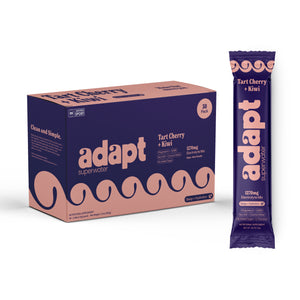
This is the whole reason we built ADAPT Sleep around a Tart Cherry & Kiwi mix instead of a capsule or a gummy. A capsule gets swallowed in two seconds — there's no ritual in it. A drink takes a minute to make and a minute to finish, and that minute is the habit. It's melatonin-free by design, built instead around magnesium citrate, GABA, and L-theanine alongside the tart cherry and kiwi, because we wanted something you reach for every night without your body adjusting to it or needing more of it over time. The goal was never to knock you out — it's to give the "pour" step something worth pouring.
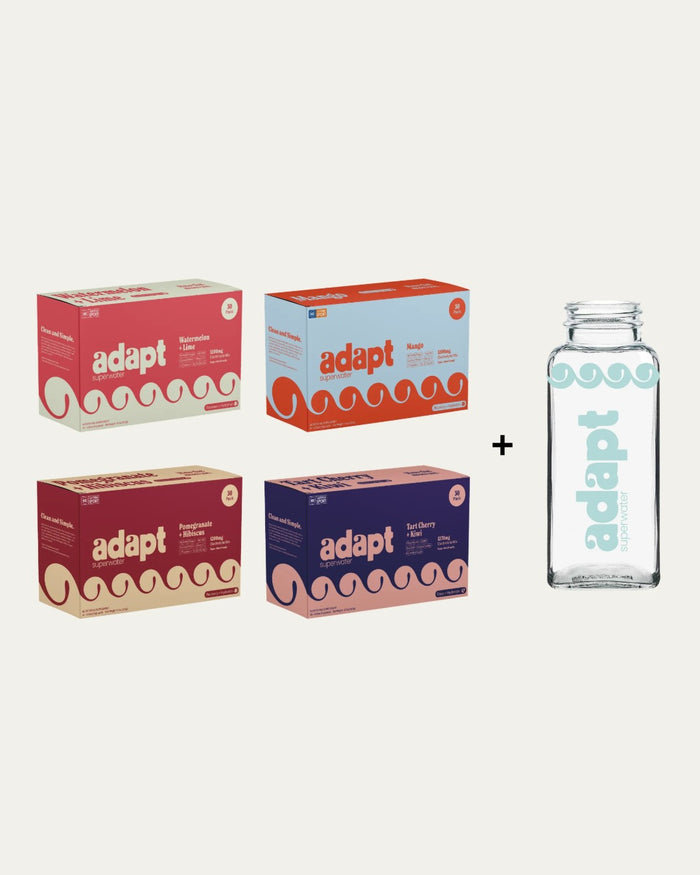
If you already have a tea or a supplement you like, that works too. The product matters less than the consistency. But if you've been looking for a reason to make this step easy to repeat, that's exactly what we built it for — you can see the full lineup on our blog if you want the long version of how we landed on this formula.
Why Five Minutes Beats Twenty
There's a reason this isn't "the twenty-minute wind-down routine." Twenty minutes requires planning. Five minutes requires a timer, or nothing at all. The habits that last are the ones you can do without negotiating with yourself first, and five minutes is short enough that "I don't have time" stops being a real excuse — even after a double practice, a late flight, or a shift that ran long.
The five minutes also isn't about forcing sleep. It's about giving your nervous system a clear signal that the demands of the day are done, which is a different problem than falling asleep and one that a lot of wind-down advice conflates. You're not trying to sedate yourself. You're trying to stop negotiating with your phone at 11pm.
Making It Stick: Attach It to Something You Already Do
The habit will fall apart if it's floating on its own, so give it an anchor:
Right after you brush your teeth. You already do this every night without thinking about it — tack the five minutes on immediately after.
The same spot, every night. Same chair, same side of the counter, same step of your kitchen. Your environment becomes part of the cue.
Keep the order identical. Pour, phone away, lights down, breathe, drink. The sequence matters more than any single step in it — your brain learns the pattern, not the individual actions.
Travel version: same five steps, different location. A hotel room works. So does a tour bus or a teammate's guest room. The habit doesn't need your bedroom — it needs the sequence.
Frequently Asked Questions
What's the difference between a wind-down routine and a wind-down habit?
A routine is a set of steps you follow. A habit is a single cue your brain runs on its own, without you deciding to do it each time. Most wind-down advice describes routines. This is built to become a habit — which is why it's five minutes instead of twenty.
Do I need to do all five steps every night?
The more consistently you do them, the faster the habit sticks. But if you only have time for one step on a rough night, make it the phone-away step — it does the most work on its own.
Can I do this in the morning instead?
You can build a version of this for a morning reset, but the sequence here is specifically built around signaling "the day is over," which only works as an evening cue.
Is ADAPT Sleep required to make this work?
No. The habit works with tea, water, or nothing in your hands at all. ADAPT Sleep just gives the "pour" step something consistent and repeatable, which is why we built it the way we did — melatonin-free, with magnesium, GABA, L-theanine, tart cherry, and kiwi.
How long until this actually feels automatic?
Most people notice it starting to feel automatic somewhere around two to three weeks of doing it most nights — same as any other habit built on repetition rather than willpower.
Start Tonight
You don't need a new evening routine. You need one five-minute habit you'll actually repeat. Pour, phone away, lights down, three slow breaths, drink it, sit still. That's the whole thing.
If you want to build your "pour" step around something made for exactly this, shop ADAPT Sleep — or read more on the Adapt SuperWater blog for how we think about hydration, recovery, and sleep.